Sign-translation gloves — Noddy Chung
← Back to logbook Case 03
Product design Sensor fusion 2017–19 · Hong Kong, Japan, USA

Sign-
translation
gloves

A pair of gloves that reads sign language and speaks it. Flex sensors measure how far each finger bends, a gyroscope carries the hand's angle and acceleration, a Kalman filter cleans the signal, and Bluetooth pairs both gloves to an app that prints and says the meaning. Intended as a substitute voice, not a demo.
RoleProject director & team captain
HardwareFlex sensors · MPU-6050 · Arduino Nano · BLE 4.2
Shown at8 competitions · 8 exhibitions · 6 conferences
ResultsIntel ISEF finalist · HKSSPC champion & EEE award
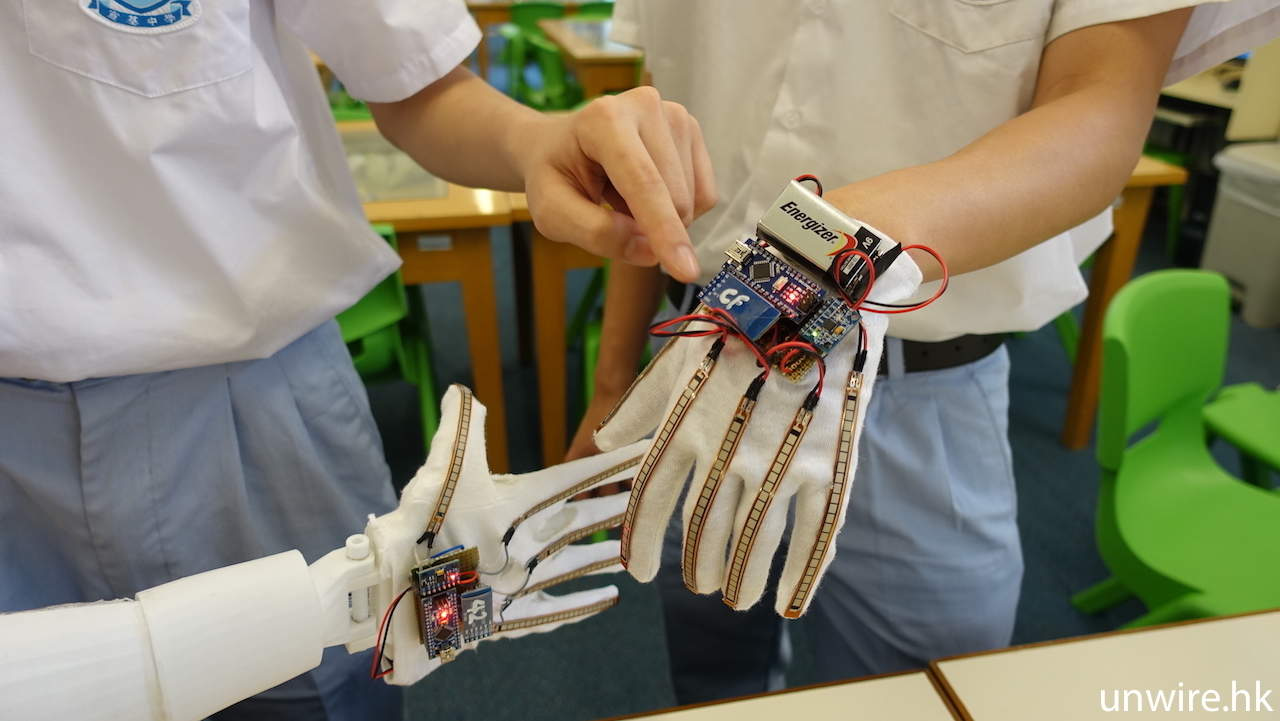
Sensor glove with flex strips along each finger, wired to a microcontroller at the wrist
five flex strips, one IMU, everything on the wrist

Four questions,
four answers

how do you detect a finger bending?

A flex sensor along each finger changes resistance as it curls. Read the change, get a bend level per finger.

how do you catch the movement?

An MPU-6050 gyroscope records the hand's angle and acceleration, so a gesture is a path, not a pose.

how does it reach the phone?

Bluetooth 4.2 — the only option that pairs both gloves to one device at the same time. WiFi and NFC were tried and dropped.

how do you trust the data?

An Arduino Nano packs both streams into one format and a Kalman filter smooths them before anything is matched.

Teachable,
out loud

The app shows the meaning on screen and speaks it, so a hearing person needs no training to be part of the conversation. New signs are added by recording the live glove data against a word — the vocabulary grows by use rather than by a firmware release.
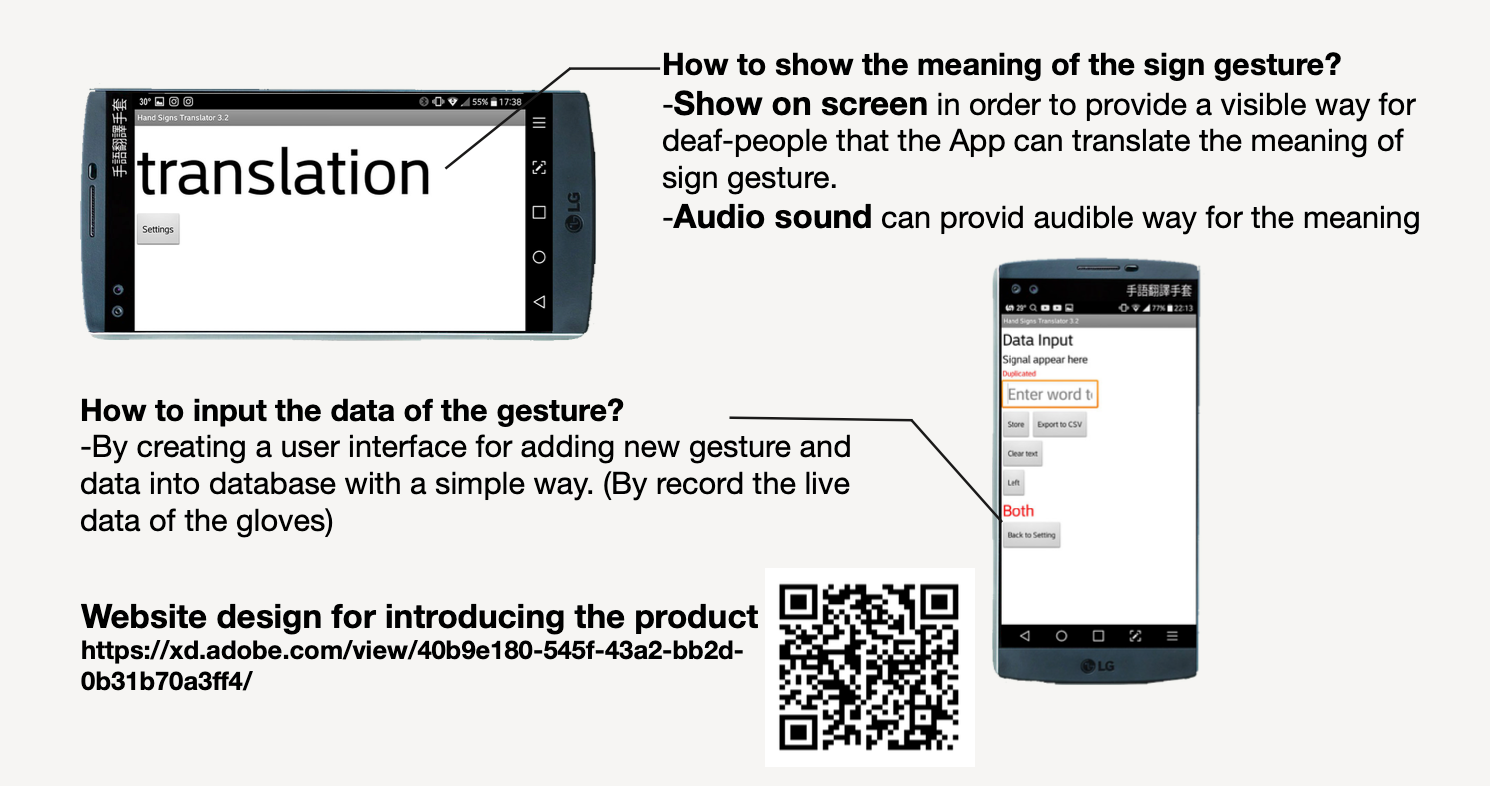
Read — large translation type, one word at a glance.
Hear — audio output for the meaning.
Teach — record a gesture, name it, store it, export to CSV.
App screens showing the translation display and the gesture data-input interface
translate screen, and the one that teaches it

Out in the world

Carrying a project is half the work. I captained the team through eight international competitions, presented at exhibitions and technology conferences, and handled ten media interviews about the gloves.
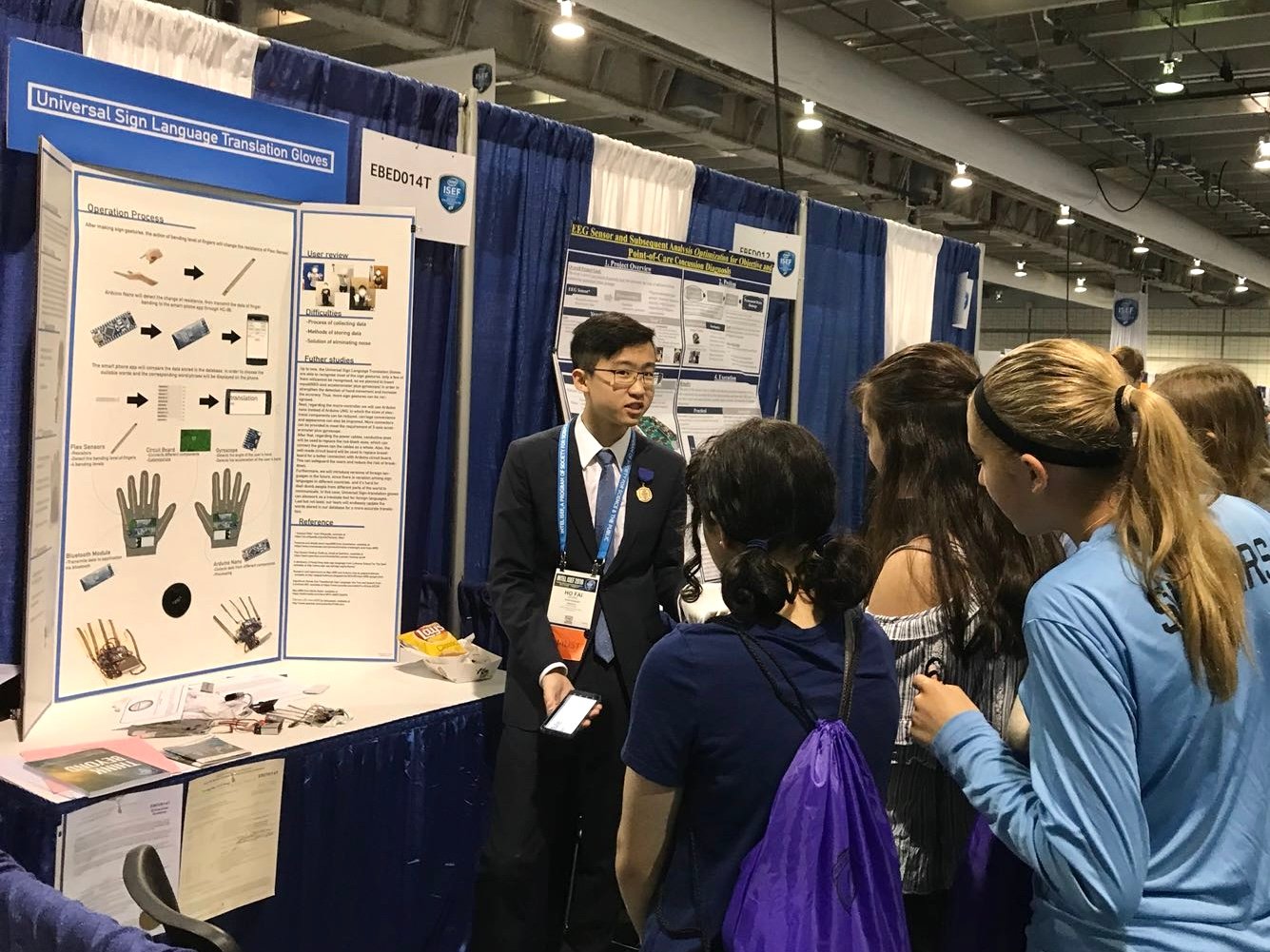
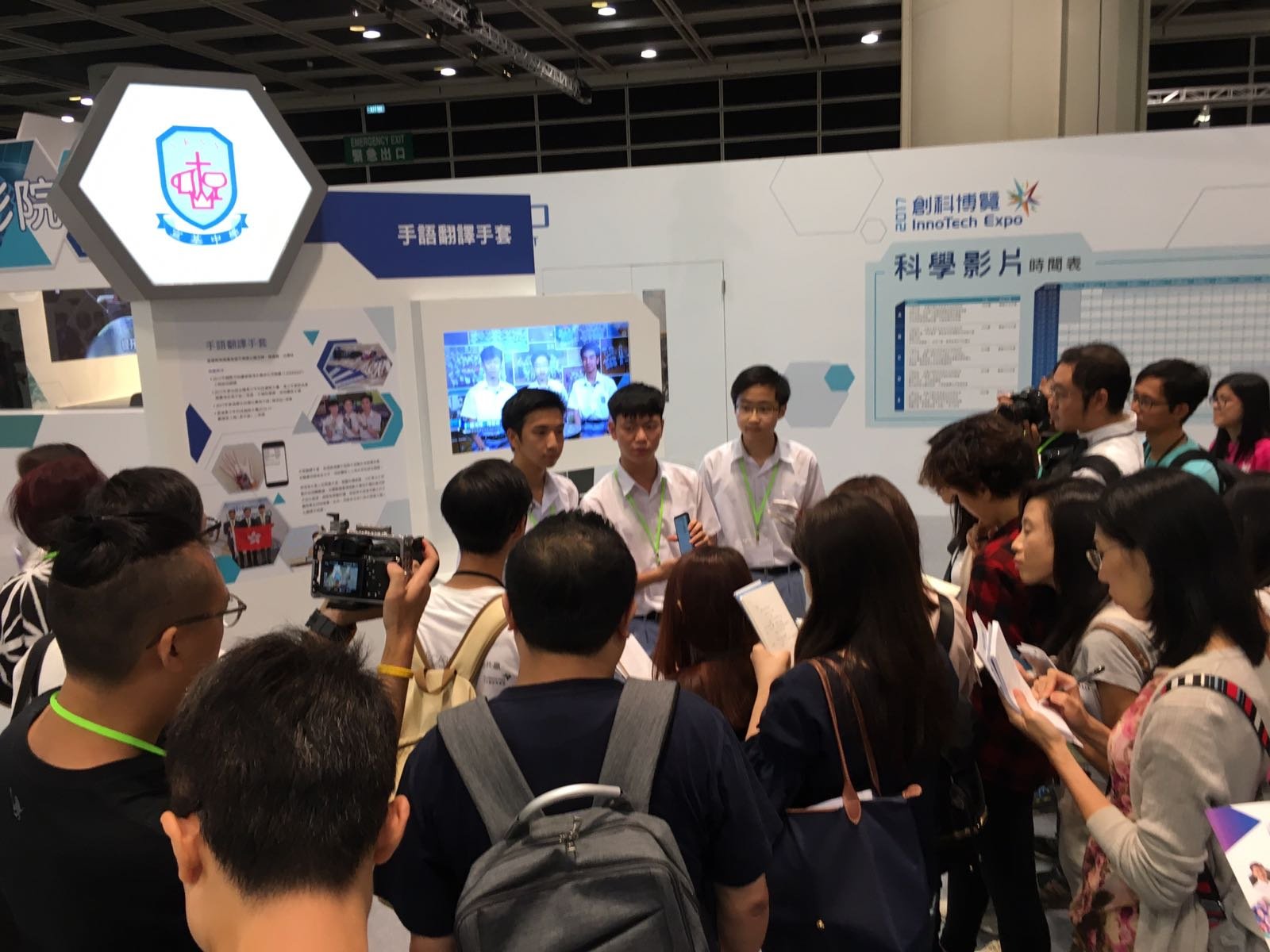
Presenting the gloves at the Intel ISEF booth to visitors
Intel ISEF, Pittsburgh — finalist
Press and camera crews gathered around the gloves exhibit
InnoTech Expo — press wall
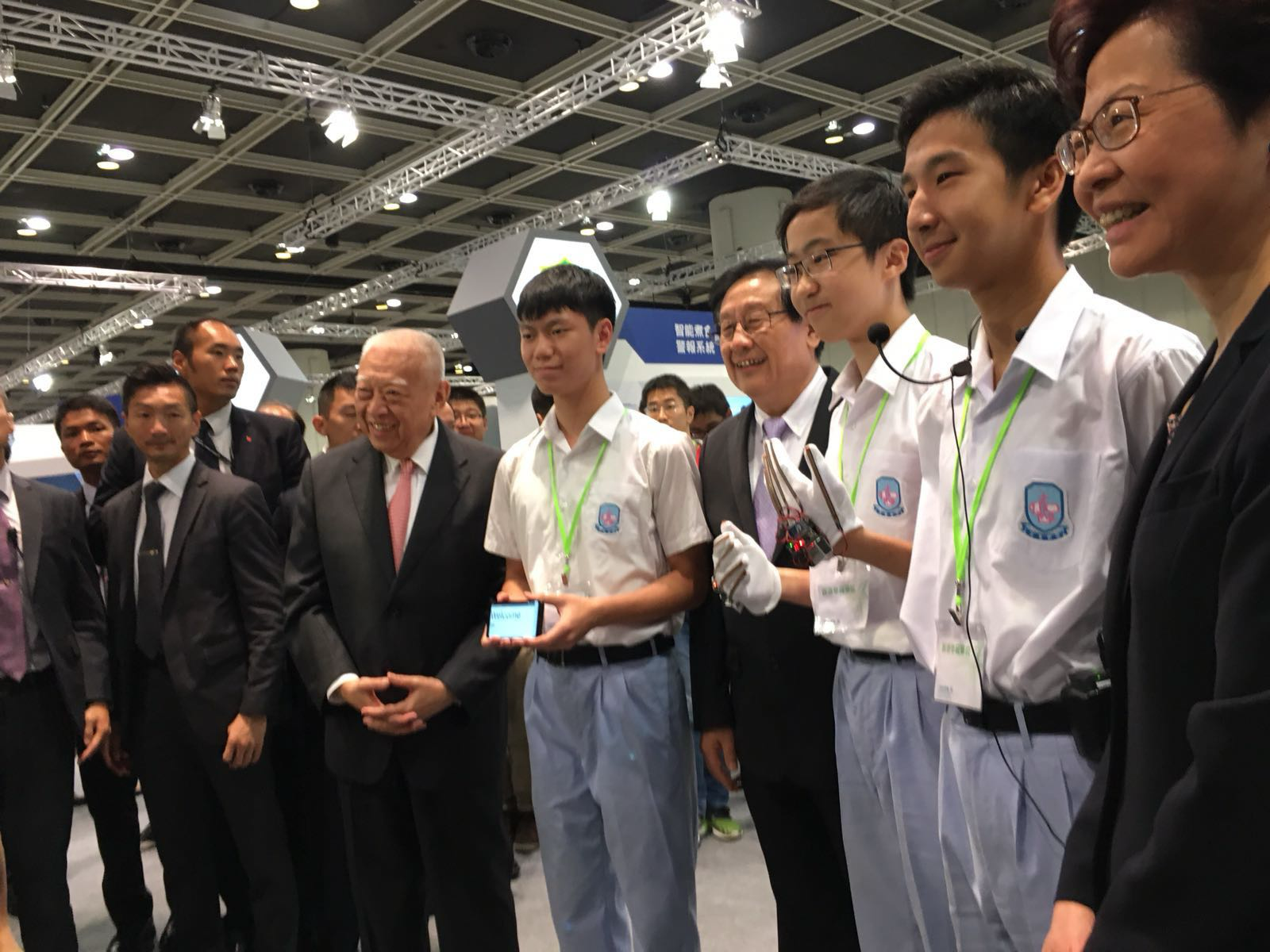
Demonstrating the gloves to visiting officials at the expo
demo, live, no second take
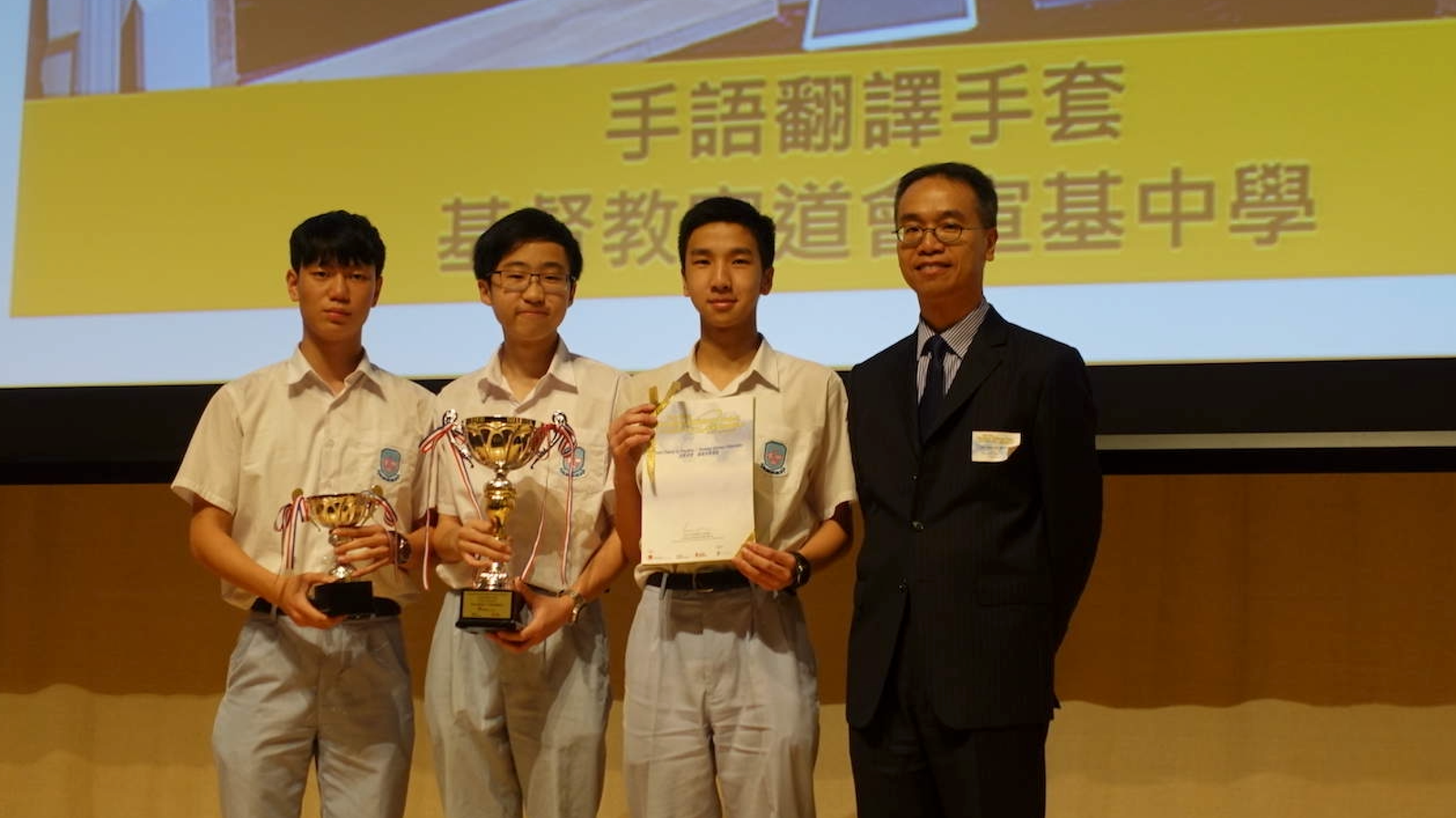
Team holding the championship trophy for the gloves
HKSSPC — champion & EEE award

What it taught me

whole product
Sensors, firmware, app, enclosure, poster and pitch are one deliverable, not five.
explaining it
Six conferences and ten interviews taught me to describe hardware to people who don't build it.
users first
The purpose was someone else's voice. That framing decided every technical trade-off.
Next: Gesture-controlled trolley → All work chungnoddy0808@gmail.com